By Mary DeSimone
Founder, Mountaintop Education Consulting
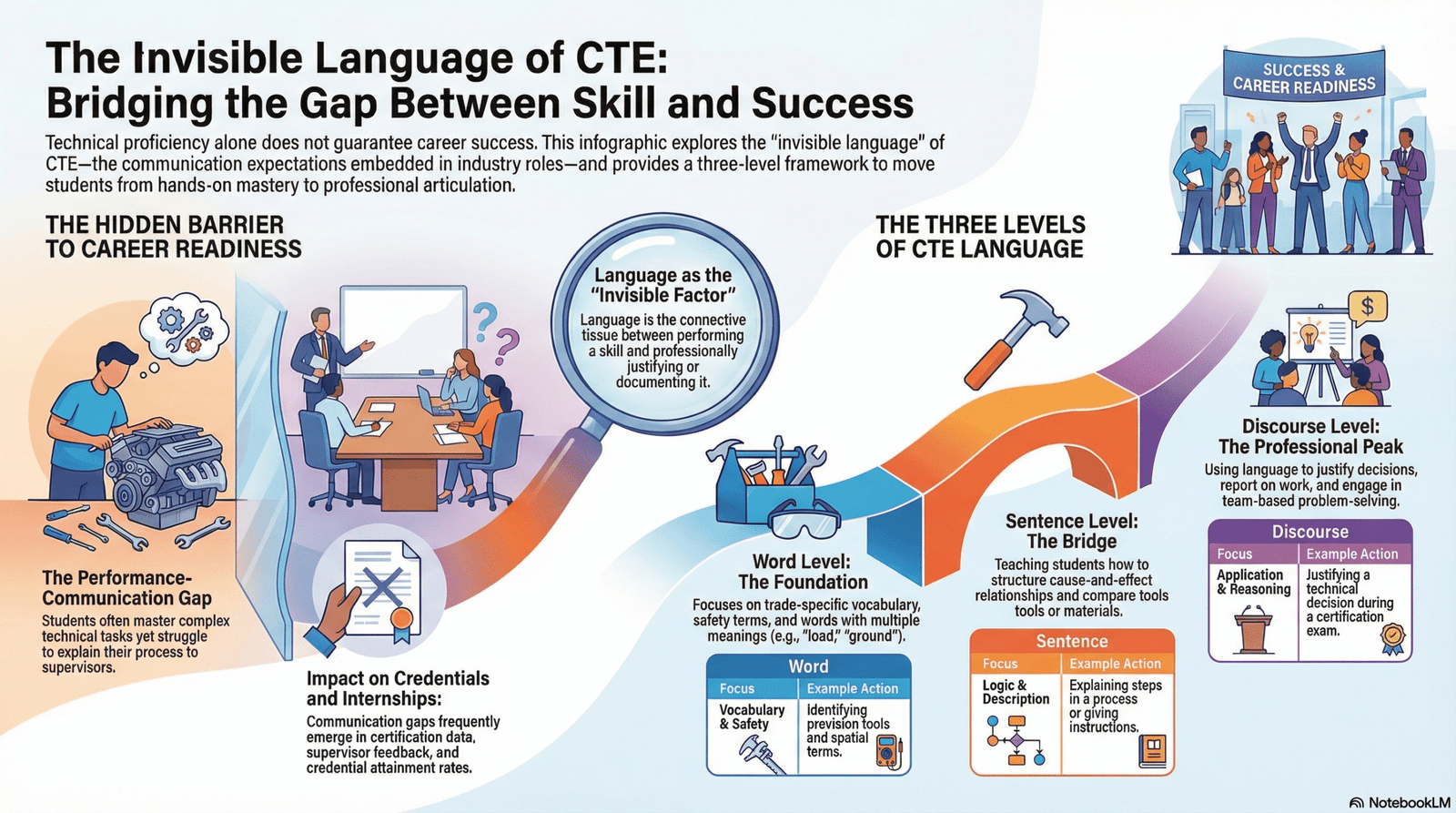
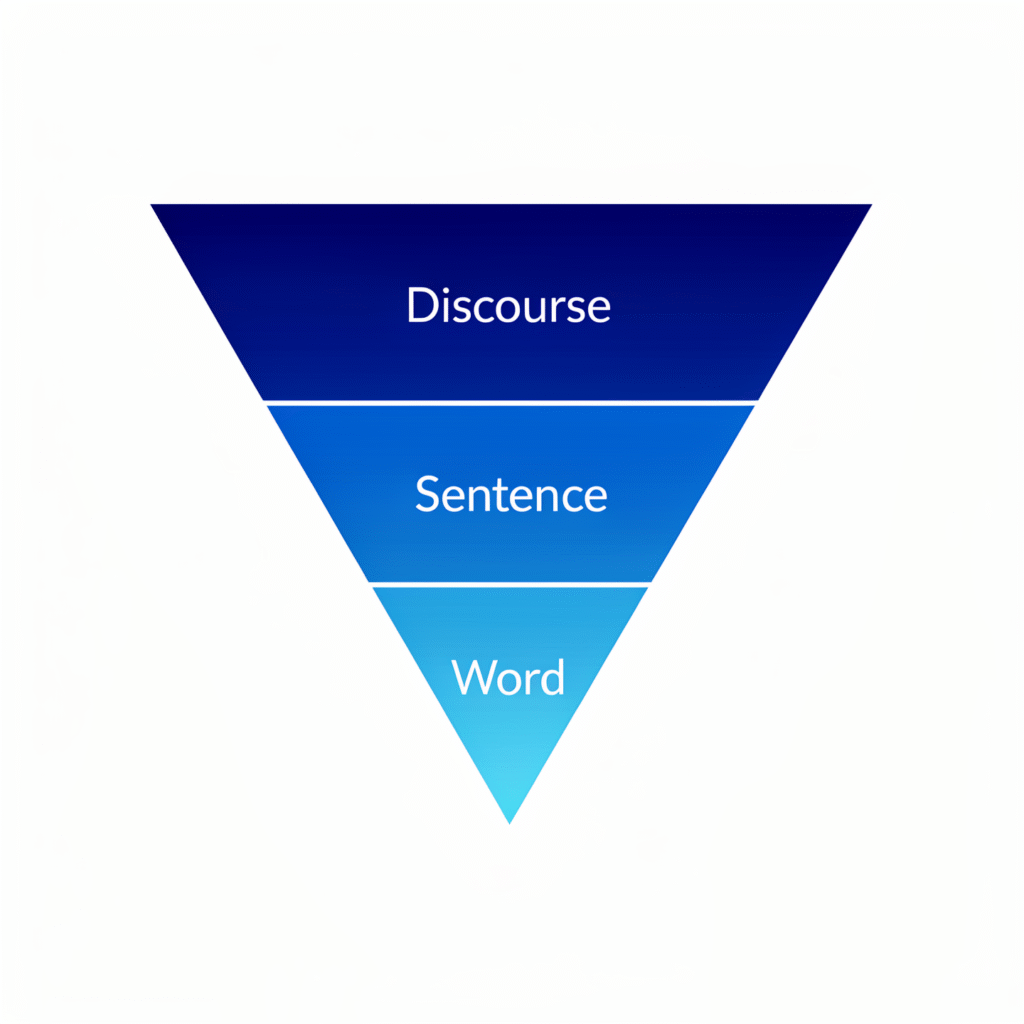
In our previous article, we explored how communication expectations in CTE often remain implicit. We examined how language operates across interconnected discourse, sentence, and word levels, and how clarity at each level strengthens student performance.
A recent conversation with an automotive instructor brought this into sharper focus.
The instructor described a multilingual student who consistently performed well in class. He could accurately diagnose engine issues, use diagnostic tools appropriately, and complete repairs with precision. On hands-on technical assessments, he met expectations.
Yet during his co-op placement, supervisors shared a different concern. When asked to explain his diagnostic reasoning to a lead technician or speak with a customer about the repair, he struggled to clearly justify his decisions and describe the steps he had taken. The technical understanding was present. The professional communication was not.

As the conversation continued, other educators recognized the pattern. It was not limited to multilingual students. Some native English speakers appeared more comfortable explaining their thinking, often because they had grown up around family owned shops and had absorbed the language of the trade over time. Others, particularly students entering the field for the first time, were encountering not only new technical skills but a new professional way of speaking about their work.
What began as one instructor’s observation became a broader reflection: What communication expectations are embedded within our tasks that we have never explicitly named or practiced?
Using the lens introduced in the previous article, we began at the discourse level. What was this task actually asking students to communicate?
What was this troubleshooting task actually asking students to communicate?
Before: Focus on Task Completion Without Clear Communication Expectations
Students diagnose a performance issue in a vehicle.
Assessment focuses on:
- Correct use of diagnostic tools
- Accurate identification of the faulty component
- Safe and proper repair
- Restored vehicle function
The technical expectations are rigorous.
However, the communication demands are largely assumed rather than defined
After: Explicit Communication Expectations Shared with Students
Students diagnose a performance issue in a vehicle and clearly explain their reasoning from start to finish.
Communication expectations include:
- Describing the full diagnostic sequence from initial symptoms to repair
- Explaining how specific evidence led to the final diagnosis
- Justifying why certain tests were selected or ruled out
- Adjusting explanations appropriately for different audiences, such as a lead technician or a customer
The technical task has not changed.
What has changed is the visibility of the communication expectations embedded within it.
Starting at the discourse level clarified not only what students should be able to explain, but to whom they should be able to explain it. That clarity then revealed the sentence patterns students needed to practice, such as explaining cause and effect or justifying decisions. Finally, we identified the precise technical vocabulary students needed to use accurately within full explanations.
The shift was not about adding more content. It was about aligning the task with the full communication demands of the field.
Before teaching your next performance task, try a brief reflection.
If a student truly demonstrates mastery, what should they be able to explain from start to
finish? And to whom should they be able to explain it?
Write out what a strong explanation would sound like within your field. Notice the reasoning patterns and vocabulary embedded within that model. Then identify one structured opportunity for students to practice explaining their thinking to a specific audience before they are evaluated in class or in a co-op placement. *
*If it is helpful, you might use an AI tool to brainstorm what a clear professional explanation could include. The goal is not to replace your expertise, but to surface the communication demands that may otherwise remain implicit. As the instructional professional, you determine what rigor looks like in your program. The lens simply helps make those expectations visible.
In the next article, we will explore how structured classroom interaction helps students rehearse the professional discourse of their field before they encounter it in work-based learning settings and beyond.
Mary DeSimone
Founder, Mountaintop Education Consulting
Supporting schools in strengthening instructional clarity through a multilingual lens.
www.mountaintoped.com
info@mountaintoped.com